

2026 Global MBA Rankings Highlight : MIT Sloan Takes #1, Wharton Falls, and What Every MBA Applicant Must Know
B-SCHOOL NEWS • TOP ONE PERCENT
The Global MBA Power Shift Is No Longer Coming. It’s Already Here.
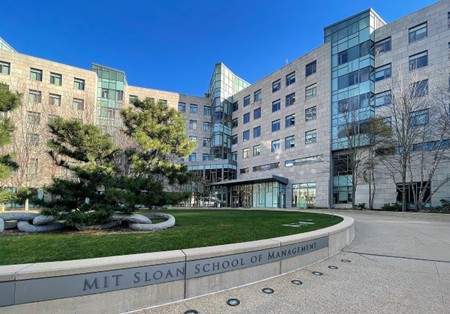
For the first time in history, the MIT Sloan School of Management has claimed the #1 position in the Financial Times Global MBA Rankings 2026, vaulting five places in a single year and ending Wharton School’s two-year reign at the top.
But the bigger story is not just who won.
It is what the rankings are beginning to reward.
INSEAD climbed to #2. Wharton moved to #3. And remarkably, five of the world’s top 10 MBA programs are now European institutions, including IESE Business School, London Business School, HEC Paris, and Esade Business School.
For decades, elite MBA conversations revolved almost exclusively around American dominance.
That era is evolving.
Today’s rankings increasingly reward international mobility, salary acceleration, global employability, diversity of experience, and long-term career optionality, areas where European one-year MBA formats have become extraordinarily competitive.
And then comes the most important signal for Indian applicants.
Indian School of Business recorded one of the strongest salary growth outcomes among major global MBA programs in this year’s FT rankings, a reminder that India-origin candidates no longer need to view global business education through a purely US-centric lens.
At the same time, the Fortune MBA Rankings 2026 told a completely different story.
Released in February, Fortune placed Wharton at #1 for the first time ever using a methodology heavily weighted toward outcomes, including median base salary, employment rates, and career placement success. Meanwhile, the QS Global MBA Rankings 2026 continue to rank Wharton first, followed by Harvard Business School and MIT Sloan.
Which raises an uncomfortable but important truth:
There is no universally “best” MBA program anymore.
There are only programs that are best aligned to specific career trajectories.
For applicants targeting consulting, private equity, AI strategy, entrepreneurship, global mobility, or accelerated post-MBA ROI, the definition of prestige itself is becoming more nuanced.
What does this mean for a 2026 applicant?
First, MIT Sloan’s rise will almost certainly trigger an application surge. Selectivity at the very top will become even more brutal over the next cycle.
Second, score inflation is real. For programs like Sloan, Wharton, and Harvard, a 720+ GMAT Classic equivalent, or roughly 665+ on the GMAT Focus Edition, is increasingly becoming the baseline for serious consideration, not differentiation.
And third, ISB’s growing global credibility is changing the equation for ambitious Indian applicants. A strong GMAT Focus score combined with elite execution in work experience, leadership, and narrative positioning can now create a genuinely global admissions strategy, not just a domestic one.
The applicants who will win in 2026 are not the ones blindly chasing rankings.
They are the ones who understand why the rankings are changing in the first place.
Not because it guarantees admission.
But because it changes everything around your application.
A top GMAT score can:
• Offset an average academic profile
• Unlock scholarships worth lakhs and crores
• Move your application from “competitive” to “elite”
• Open doors to schools like Indian School of Business, MIT Sloan School of Management, The Wharton School, and INSEAD
• Give admissions committees confidence in your analytical ability from day one
At Top One Percent, we have spent 15+ years helping students master exactly that.
Our students have achieved:
• 8,502 99th & 100th percentile scores
• 2,000+ ISB admits
• ₹40+ Cr scholarships at ISB alone
• Nearly 7,000 Ivy League + M7 admits
• $19M+ in international scholarships
The reality is simple:
In a world where thousands of applicants have similar work experience, similar resumes, and similar ambitions, the GMAT is often the clearest differentiator.
And the students who treat it strategically, not emotionally, are the ones who change the trajectory of their careers.
Book your profile evaluation + demo assessment here:
top-one-percent.com
The Global MBA Power Shift Is No Longer Coming. It’s Already Here.
For the first time in history, the MIT Sloan School of Management has claimed the #1 position in the Financial Times Global MBA Rankings 2026, vaulting five places in a single year and ending Wharton School’s two-year reign at the top.
But the bigger story is not just who won.
It is what the rankings are beginning to reward.
INSEAD climbed to #2. Wharton moved to #3. And remarkably, five of the world’s top 10 MBA programs are now European institutions, including IESE Business School, London Business School, HEC Paris, and Esade Business School.
For decades, elite MBA conversations revolved almost exclusively around American dominance.
That era is evolving.
Today’s rankings increasingly reward international mobility, salary acceleration, global employability, diversity of experience, and long-term career optionality, areas where European one-year MBA formats have become extraordinarily competitive.
And then comes the most important signal for Indian applicants.
Indian School of Business recorded one of the strongest salary growth outcomes among major global MBA programs in this year’s FT rankings, a reminder that India-origin candidates no longer need to view global business education through a purely US-centric lens.
At the same time, the Fortune MBA Rankings 2026 told a completely different story.
Released in February, Fortune placed Wharton at #1 for the first time ever using a methodology heavily weighted toward outcomes, including median base salary, employment rates, and career placement success. Meanwhile, the QS Global MBA Rankings 2026 continue to rank Wharton first, followed by Harvard Business School and MIT Sloan.
Which raises an uncomfortable but important truth:
There is no universally “best” MBA program anymore.
There are only programs that are best aligned to specific career trajectories.
For applicants targeting consulting, private equity, AI strategy, entrepreneurship, global mobility, or accelerated post-MBA ROI, the definition of prestige itself is becoming more nuanced.
What does this mean for a 2026 applicant?
First, MIT Sloan’s rise will almost certainly trigger an application surge. Selectivity at the very top will become even more brutal over the next cycle.
Second, score inflation is real. For programs like Sloan, Wharton, and Harvard, a 720+ GMAT Classic equivalent, or roughly 665+ on the GMAT Focus Edition, is increasingly becoming the baseline for serious consideration, not differentiation.
And third, ISB’s growing global credibility is changing the equation for ambitious Indian applicants. A strong GMAT Focus score combined with elite execution in work experience, leadership, and narrative positioning can now create a genuinely global admissions strategy, not just a domestic one.
The applicants who will win in 2026 are not the ones blindly chasing rankings.
They are the ones who understand why the rankings are changing in the first place.
The GMAT Is Still The Single Most Powerful Lever In MBA Admissions.
Not because it guarantees admission.
But because it changes everything around your application.
A top GMAT score can:
• Offset an average academic profile
• Unlock scholarships worth lakhs and crores
• Move your application from “competitive” to “elite”
• Open doors to schools like Indian School of Business, MIT Sloan School of Management, The Wharton School, and INSEAD
• Give admissions committees confidence in your analytical ability from day one
At Top One Percent, we have spent 15+ years helping students master exactly that.
Our students have achieved:
• 8,502 99th & 100th percentile scores
• 2,000+ ISB admits
• ₹40+ Cr scholarships at ISB alone
• Nearly 7,000 Ivy League + M7 admits
• $19M+ in international scholarships
The reality is simple:
In a world where thousands of applicants have similar work experience, similar resumes, and similar ambitions, the GMAT is often the clearest differentiator.
And the students who treat it strategically, not emotionally, are the ones who change the trajectory of their careers.
Book your profile evaluation + demo assessment here:
top-one-percent.com
Share Article